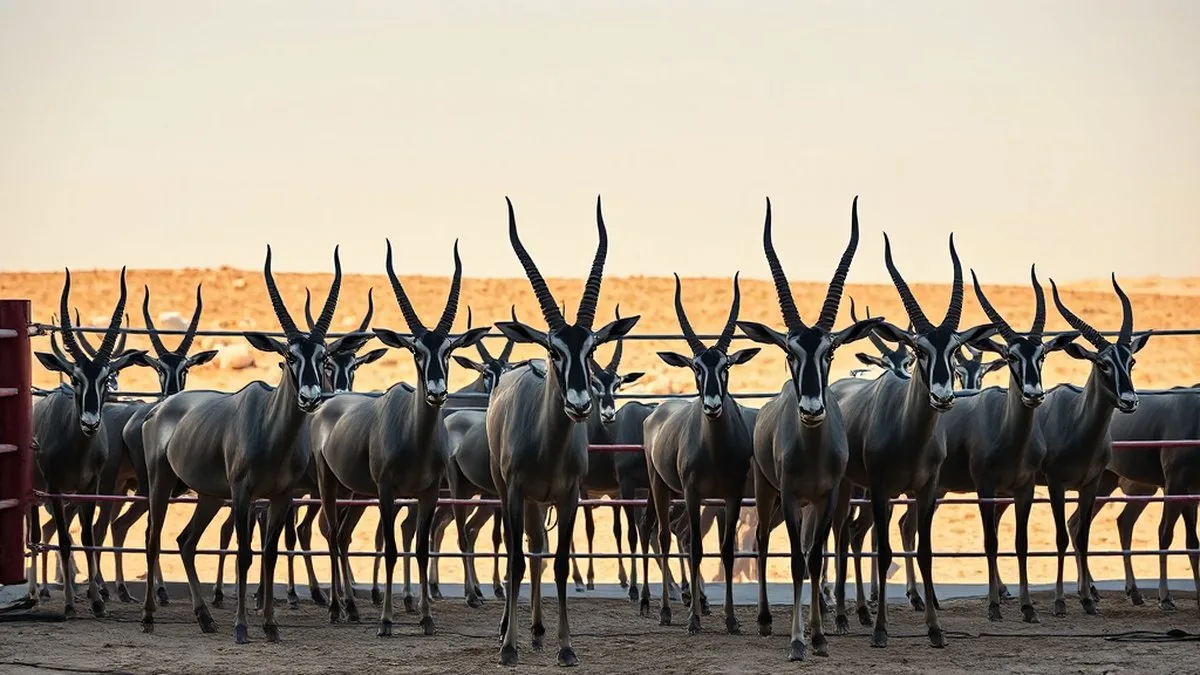
Gemsbok Expansion in the U.S. Southwest
Majestic African antelopes known as gemsbok have established a presence in the U.S. Southwest since their introduction in the 1960s and 1970s. Initially brought to New Mexico as game species for hunting, these animals have demonstrated a remarkable ability to adapt and expand. Researchers from the University of Illinois Urbana-Champaign have studied their spread, noting that gemsbok have already extended their range over 100 kilometers from their original introduction points.
Climate Change Impact on Habitat
The exceptional adaptations of gemsbok to arid conditions are a key factor in their successful establishment and expansion. The University of Illinois researchers predict that climate change will dramatically increase the availability of suitable habitat for this exotic species. Their new study forecasts a significant spillover of suitable habitat well beyond New Mexico by the year 2100. This expansion is expected to extend into Texas, Arizona, Utah, California, and potentially as far north as southern Washington and Montana.
Exotic Species and Hunting Reserves
The introduction of exotic species like the gemsbok is often linked to hunting practices. Private lands set up as for-profit hunting reserves or game ranches can facilitate the presence of both native and exotic species. In these environments, hunters may pay to kill animals within fenced enclosures, where escape is unlikely. These practices are sometimes referred to as "canned hunts." Animals on such ranches can be raised elsewhere and brought in, or acquired from various sources, including individuals trafficking surplus animals from zoos.
Related Antelope Information
While often mistaken for antelopes, North American pronghorn are a distinct species, with their closest relatives being giraffes and okapi. Pronghorn are known for their incredible speed, ranking as the second-fastest land animals on Earth, capable of reaching sprint speeds up to 60 mph. In other parts of the world, species like the greater kudu in South Africa have been observed exhibiting remarkable agility, such as leaping over safari vehicles to escape predators like lions. In Texas, a 96-acre estate was recently sold with approximately 120 exotic animals, including wildebeest, oryx, gazelle, and antelope, included in the sale.




💬 Comments (0)