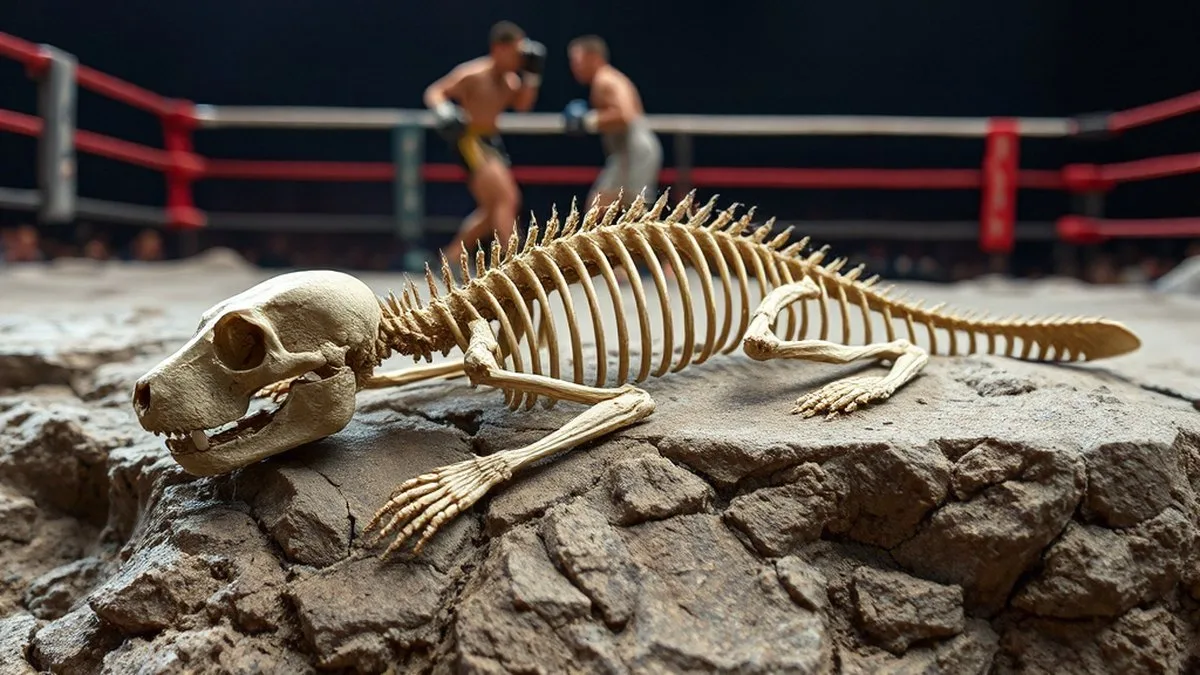
Ancient Swimmer with Modern Throat
A remarkably well-preserved fossil unearthed in China is shedding new light on mammalian evolution. The specimen, identified as Megacauda sungei, dates back approximately 165 million years to the Middle Jurassic period. This mammaliaform, an evolutionary predecessor to modern mammals, exhibits a suite of features indicating a semiaquatic lifestyle, with adaptations for swimming and foraging in water, analogous to the modern platypus.
Evolutionary Leap in Feeding Apparatus
The discovery is particularly significant due to the fossil's exceptionally preserved pharyngeal vault and hyoid skeletal anatomy. These structures suggest the presence of a soft palate, a feature that separates the oral cavity from the pharynx. This anatomical development indicates that early mammals possessed the ability to swallow and potentially suckle in a manner similar to modern therian mammals, which include marsupials and placental mammals. This sophisticated swallowing mechanism is considered a crucial innovation that enabled early mammals to diversify into a wide range of diets and ecological niches.
A Jurassic Top Predator
Megacauda sungei was the largest known Jurassic mammaliaform, measuring about 0.5 meters (1.6 feet) in length and weighing one to two kilograms, comparable in size to a modern platypus. Its physical characteristics include a broad, flattened tail, short hindlimbs with relatively long feet, and distinctive teeth with backward-curved cusps, likely used for gripping slippery prey such as fish, salamanders, and invertebrates. Researchers interpret its diet as faunivorous, meaning it consumed animal matter. Despite its relatively small size, it is considered a top predator of its time.
Implications for Mammalian Origins
The findings, published in the journal Nature, represent the earliest evidence of an aquatic lifestyle and advanced feeding mechanisms in early mammals. The research, conducted by scientists from the Universities of Shenyang, Chicago, and Bonn, highlights how critical soft-tissue anatomy for behaviors like swallowing, drinking, and suckling had evolved in the common ancestors of major mammal groups long before the diversification of modern mammals. This discovery fills a significant gap in our understanding of early mammalian anatomy and ecological diversity during the Mesozoic era.


💬 Comments (0)