Halzen Wins Nobel Prize in Physics
On October 6, 2026, Francis Halzen was awarded the Nobel Prize in Physics by the Royal Swedish Academy of Sciences for his decisive contributions to the IceCube Neutrino Observatory and the discovery of high-energy neutrinos originating from outside our solar system. The prize recognizes a breakthrough that has opened a new window into understanding the universe.
IceCube: A Unique Observatory
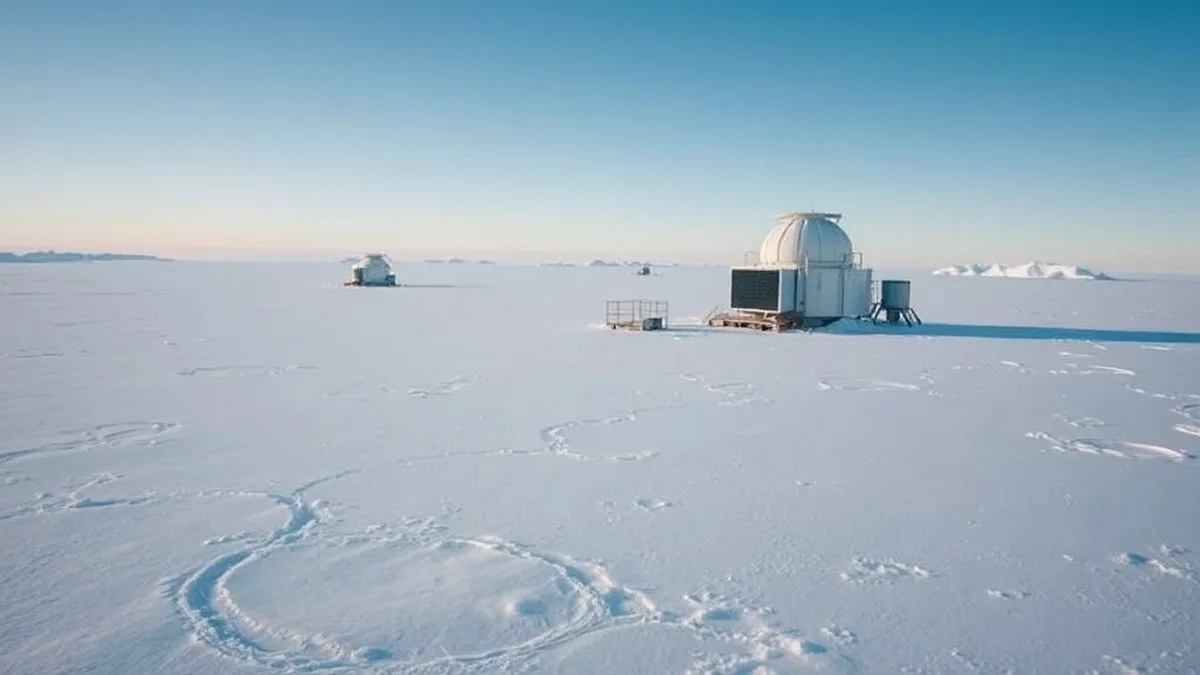
Halzen, affiliated with the University of Wisconsin–Madison, envisioned using ice at the South Pole to track neutrinos – tiny particles that rarely interact with matter. The IceCube Neutrino Observatory, equipped with light sensors embedded in a cubic kilometer of Antarctic ice, allows researchers to capture these high-energy neutrinos from distant cosmic events. The observatory became operational in 2010.
Unlocking Cosmic Mysteries
Neutrinos are notoriously difficult to detect, passing through Earth and even our bodies unnoticed most of the time. However, when a neutrino interacts with an atomic nucleus, it creates detectable signals. Scientists believe that high-energy neutrinos are created in powerful cosmic particle accelerators, but their exact sources remain largely unknown.
A New Era of Astronomy
The IceCube Observatory made its first detection of high-energy extraterrestrial neutrinos in 2013. According to the Nobel Committee, Halzen’s work has “paved the way for a new kind of astronomy.” The observatory allows scientists to study extreme astrophysical phenomena like distant galaxies and exploding stars by observing the particles they emit. Mark Pearce, chair of the Nobel Committee for Physics, described Halzen's instrument as 'fantastic'.
Halzen’s Reaction
Speaking from Italy upon receiving the news, 82-year-old Halzen expressed surprise and pleasure at winning the award. He credited a team of courageous researchers who joined him in the early stages of the project.



💬 Comments (0)