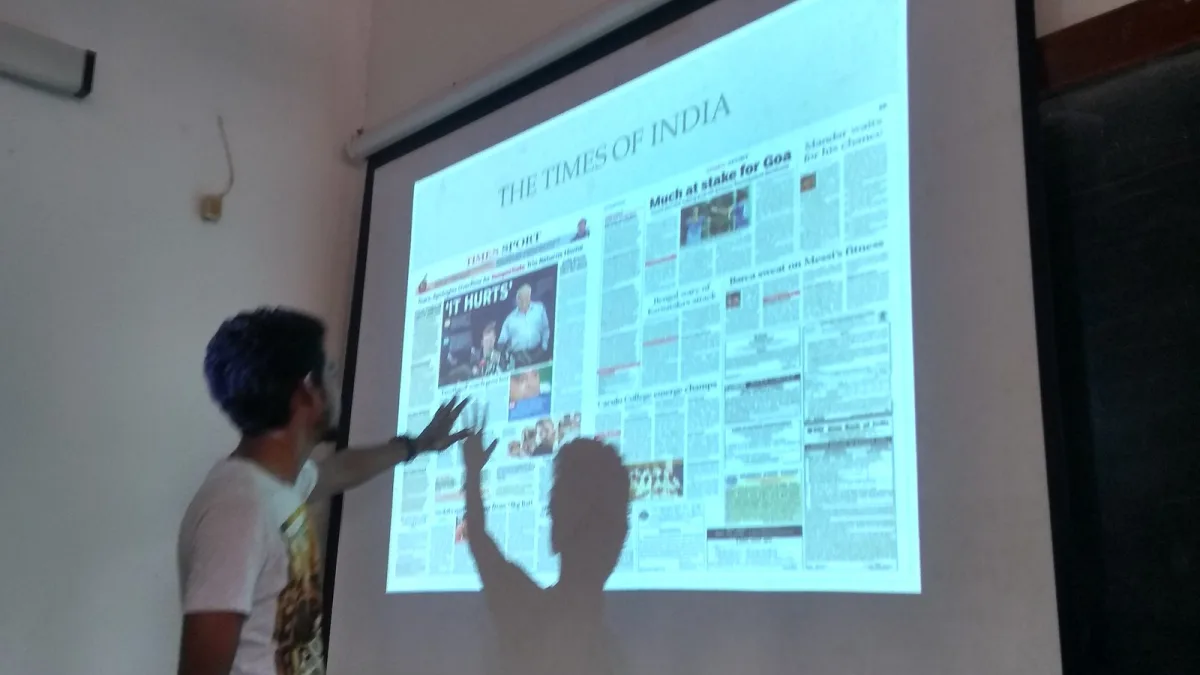
Local News Outlets Crucial in Breaking News Situations
The dissemination of breaking news often relies on the agility and community ties of local news organizations. In an era where information travels at unprecedented speeds, the role of local journalism in providing timely and accurate reports remains paramount. This is particularly evident when significant events unfold, requiring rapid communication and verification.
Dan Gray, owner, founder, and editor of The Border Pulse, emphasized this point in a recent column. He described how breaking news on October 17 arrived not through official channels, but as a series of anonymous text messages starting around 4:30 p.m. These messages came from a mix of established sources and concerned community members eager to share information. This initial influx of data provided a starting point for The Border Pulse to begin its reporting process, subsequently working through official channels to confirm what could be reported.
Timeliness and Accuracy in Reporting
The Border Pulse published its first report on a tragic incident at CFB Wainwright at 5:17 p.m. on October 17. Gray noted that for approximately 30 minutes after their initial report, searches indicated no other media outlet was covering the developing situation. However, he stressed that this does not constitute a "victory lap," as the focus must remain on the soldiers, families, and the community affected by the tragedy.
Gray articulated the core strength of local journalism: its lack of distance. Local reporters are intimately familiar with the roads, the community, and its people, enabling them to ask the right questions without needing external assignments or multiple approvals. This proximity fosters a sense of duty, where being first is secondary to maintaining accuracy and the dignity of those involved. Speed without care, he argued, amounts to mere noise.
Verification Over Brand Recognition
The principle of verification is presented as the true test of a news report, rather than the size or logo of the news organization. Gray advised readers to assess whether a report names its sources, clearly indicates its timing, and demonstrates a commitment to correcting errors. He asserted that size alone is not a guarantee of credibility.
This approach is particularly vital when national outlets have not yet covered a story. Gray suggested that this often means those larger newsrooms face bureaucratic hurdles that smaller ones can bypass. The capacity for local newsrooms, often operating with a single reporter, to provide these essential services underscores their value. The structure behind the stories, he explained, relies on the dedication of such individuals and outlets across the country.
The Enduring Value of Local Businesses
Beyond breaking news, local journalism also serves to highlight and support community institutions. Dan Kontos, in a column for the Point/Plover Metro Wire, discussed the transformation of Club Forest Bar and Grill in the Town of Plover. Located at 1176 Club Forest Drive, the establishment was a well-known landmark, a destination for those who knew it existed, offering good food, cold drinks, and a familiar local atmosphere.
Under new ownership by Chris and Sarah Adams, who also own Section 715 Throwing Company, Club Forest has undergone changes. Kontos observed that while the decor remains recognizable and the drinks are still cold, the Adams' influence has enhanced the establishment's welcoming nature, making it a more inviting and regular destination. Kontos described this as an entrepreneurial success story, emphasizing that his assessment was unsolicited and without personal gain, serving as an honest evaluation of a local business providing honest goods and services.
The Power of Sensory Memory and Personal Narrative
In a different vein, a column from CityView NC explored the profound connection between sensory experiences and memory. The author reflected on the concept of "sobremesa," the undefined moment after a meal, often experienced on Sundays with family. This period, characterized by lingering conversations, the appearance of dessert and coffee, and a general disregard for time, evokes strong nostalgic feelings.
The author recalled specific sensory details from these gatherings: the scent of coffee, the lingering aroma of an "asado" (barbecue), and the distinct citrus smell of mandarin peels accumulating on the table. These olfactory cues, mixed with the sounds of conversation, are so potent that even today, peeling a mandarin can transport the author back to those moments, demonstrating how scents can encapsulate entire places and travel across decades and geography. The column also touched upon the dynamics of family conversations, including spirited political debates where minds were rarely changed, and the leisurely, almost abandoned games of chess played by uncles, suggesting that the value lay in the shared experience rather than the outcome.
Motocross and Personal Resilience
Another archival column from Cycle News featured Johanna Stenersen, a pioneer in women's motocross. Stenersen's perspective on riding motorcycles offered a powerful testament to its impact on her life, stating, "Motocross saved my life." This sentiment comes from her book, "Torn Back and Raw: An Intimate Portrayal of a Life Hijacked by Mental Illness."
Stenersen was a prominent figure in the early days of women's motocross, a sport that has historically struggled for consistent recognition and support compared to its male counterpart. In the early 1970s, Stenersen was a top competitor, alongside Sue Fish, with whom she often lapped the entire field of women racers. Stenersen began riding at age 11, taught by her older brother, and was driven by a fierce competitive spirit, aiming to outperform Fish. The article highlights the challenges faced by women in motocross, noting that manufacturer, distributor, and sponsor support has largely benefited the men's side of the sport, leaving women's MX to receive minimal resources.
The Fall Reading Season and Literary Recommendations
As the seasons change, so too does the inclination towards certain types of reading. A column from the Indiana Daily Student highlighted the appeal of local bookstores during the fall, a time often associated with cozying up with a good book. Bloomington was noted as having several local bookstores that serve as hubs for discovering new literature.
For readers seeking emotionally resonant and character-driven stories, "Partita" by Livia Cable was recommended. The novel explores themes of loss, love, and complex relationships, following a former piano prodigy whose life is re-evaluated after a call from an old love. The book's connection to Indiana University's music school, where the main character attended, has reportedly driven its popularity. Additionally, "Frankenstein" was identified as a top seller, particularly fitting for the Halloween season. This gothic classic delves into the perils of ambition and science, questioning the essence of humanity. The article suggests that local bookstores play a vital role in connecting readers with books that align with seasonal moods and personal interests.
What This Means
These diverse columns collectively underscore the multifaceted role of journalism and narrative in contemporary society. The emphasis on local news reporting highlights its critical function in providing immediate, verifiable information during emergencies, often serving as the primary conduit for community awareness. This contrasts with the often slower, more layered processes of national media, reinforcing the value of proximity and local knowledge.
Furthermore, the pieces touch upon the enduring power of personal stories, whether they are memoirs of resilience in extreme sports, reflections on familial bonds and sensory memories, or the assessment of local entrepreneurial success. They demonstrate how narratives, whether factual reporting or personal essays, shape our understanding of community, personal identity, and the world around us. The recommendations for fall reading also point to the cultural significance of literature in providing comfort, reflection, and engagement with complex themes, often facilitated by accessible local institutions like bookstores.



💬 Comments (0)