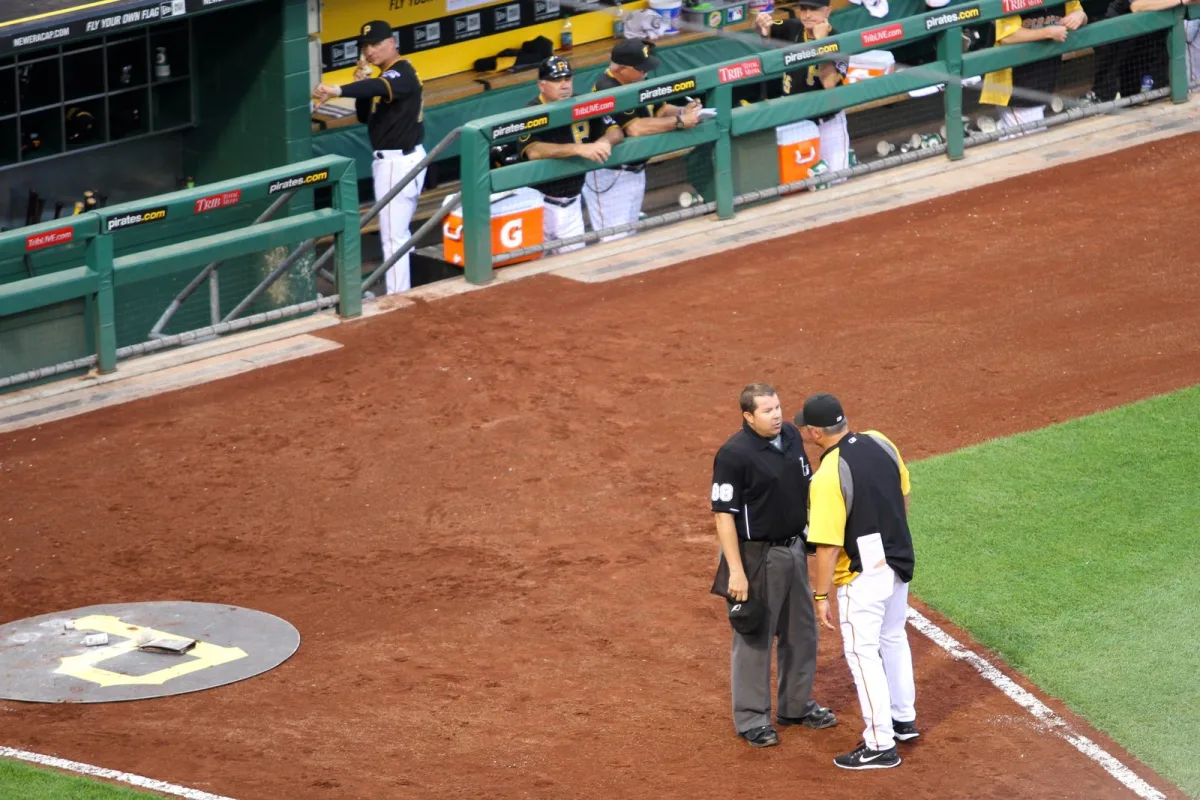
MLB Replay Operations Center Centralizes Review Process
Major League Baseball's commitment to accuracy in officiating is increasingly reliant on advanced technology, with the Replay Operations Center in Manhattan serving as the nerve center for reviewing close calls. This facility connects all 30 ballparks, enabling umpires and video coaches to scrutinize plays from multiple camera angles. The goal is to ensure that on-field decisions are either upheld or overturned with a higher degree of certainty, aiming to maintain the integrity of the game.
Within this high-stakes environment, video coaches play a critical role. They are allotted a mere 15 seconds to evaluate video footage and provide crucial advice to managers regarding potential challenges to calls made on the field. The technology employed by MLB facilitates the rapid delivery of video evidence, allowing for swift decision-making within the tight timeframe of a challenge window. This system is designed to expedite the review process while ensuring thoroughness.
Zoom Integration Enhances Communication and Support
The technological infrastructure supporting MLB's replay system extends beyond video analysis, incorporating communication platforms to streamline operations. Zoom has been adopted as the league's official communication platform, playing a multifaceted role. Through Zoom Contact Center, team video coaches can directly communicate with MLB staff. This direct line of communication is vital for addressing any immediate issues related to video feeds, routing problems, or equipment malfunctions, ensuring that these technical glitches do not impede the challenge process before the deadline expires.
Zoom's involvement with Major League Baseball is not limited to in-game replay reviews. The league also leverages Zoom Events and its unified communications capabilities to facilitate seamless coordination during significant events like the MLB Draft. These tools enable secure and real-time communication between club war rooms, scouts, and other key participants, aiding in strategic decision-making. Furthermore, Zoom Contact Center extends its support to MLB.TV fan services, assisting fans in obtaining information about game broadcasts and league-wide happenings.
World Series Double Play Controversy Highlights Replay's Impact
The 2026 World Series, Game 1, provided a stark example of how replay reviews can dramatically alter the course of a pivotal game. With the bases loaded in the ninth inning and the Milwaukee Brewers on the verge of victory, a potential game-ending double play was initiated. Second baseman Brice Turang fielded a ground ball, throwing to shortstop Cooper Pratt for the out at second, who then relayed to first baseman Jake Bauers to complete the double play. The play initially appeared to seal the win for the Brewers.
However, a subsequent replay review of the play led to the crucial out at second base being overturned. According to FOX Sports rules expert Andy Fletcher, the review focused on the precise moment the ball entered the thrower's glove and whether the fielder's foot was still in contact with the base. Fletcher indicated that the call was correctly overturned, as it appeared Pratt's foot had already left second base by the time he secured the ball. This overturned call extended the game, though the Brewers ultimately secured a 3-2 victory after closer Trevor Megill struck out the final batter. The incident underscored the intense scrutiny and the fine margins involved in replay decisions.
Postseason Elimination Tied to Fan Interference Ruling
In another high-stakes scenario, the New York Yankees' 2026 postseason journey concluded amidst controversy following a replay review of a potential game-tying home run. The Yankees were trailing 4-2 in the sixth inning of Game 3 of the American League Division Series against the Tampa Bay Rays when batter Anthony Volpe hit a ball toward the left-field wall. Initially ruled a two-run home run that would have tied the game, the call was overturned after a lengthy review.
Major League Baseball determined that a spectator had interfered with the ball while it was still in play and potentially on its way over the fence. Officials concluded that the ball would not have cleared the wall without the interference. Consequently, the play was ruled an RBI double, scoring a run but not tying the game. The Yankees were unable to capitalize on subsequent opportunities, ultimately losing the game 4-3 and being swept in the series. This decision drew comparisons to the infamous Jeffrey Maier incident from the 1996 postseason, highlighting the enduring impact of fan interaction and replay technology on critical game outcomes.
Automated Ball-Strike System Marks New Era
Beyond replay reviews, Major League Baseball has embraced technology to address long-standing debates over officiating, particularly concerning ball and strike calls. The introduction of the Automated Ball-Strike (ABS) challenge system, often referred to as the "robot umpire," began in 2026, signaling a significant shift in how judgment calls are made. This system aims to eliminate arguments between umpires and managers over the strike zone, thereby preserving the pace and flow of the game.
Commissioner Rob Manfred expressed support for the ABS system, stating it strikes a balance between maintaining the umpire's role and correcting missed calls in high-leverage situations. In its inaugural season in 2026, the ABS system proved to be highly active. Out of 10,557 challenges made, 5,686 calls were overturned, indicating a substantial impact on game decisions. Reports from ESPN detailed that the system overturned approximately 54% of challenged calls, with catchers demonstrating a higher success rate than batters in utilizing the challenge system. William Contreras, for instance, was noted for preventing an estimated 5.2 runs through his effective use of the ABS challenges.
What This Means
The increasing reliance on replay technology and the introduction of automated systems like ABS signify a fundamental shift in Major League Baseball, moving towards a more data-driven and precise officiating model. For fans, this means that crucial game moments, once subject to human error and intense debate, are now subject to technological scrutiny, potentially leading to more accurate outcomes but also altering the traditional flow and emotional impact of certain plays. The integration of platforms like Zoom highlights how modern communication technology is becoming indispensable for the operational efficiency of professional sports leagues, facilitating real-time decision-making across vast distances.
The controversies highlighted in the World Series and postseason games demonstrate that while technology aims for accuracy, its application can still be a source of debate and significantly influence results. The success of the ABS system in its first year suggests a potential future where more judgment calls could be automated, further reducing the human element in specific aspects of umpiring. Future developments will likely focus on refining these technologies, ensuring their seamless integration, and managing the ongoing balance between technological assistance and the inherent human drama of baseball.




💬 Comments (0)