Key Lunar Sites Identified for Future Exploration
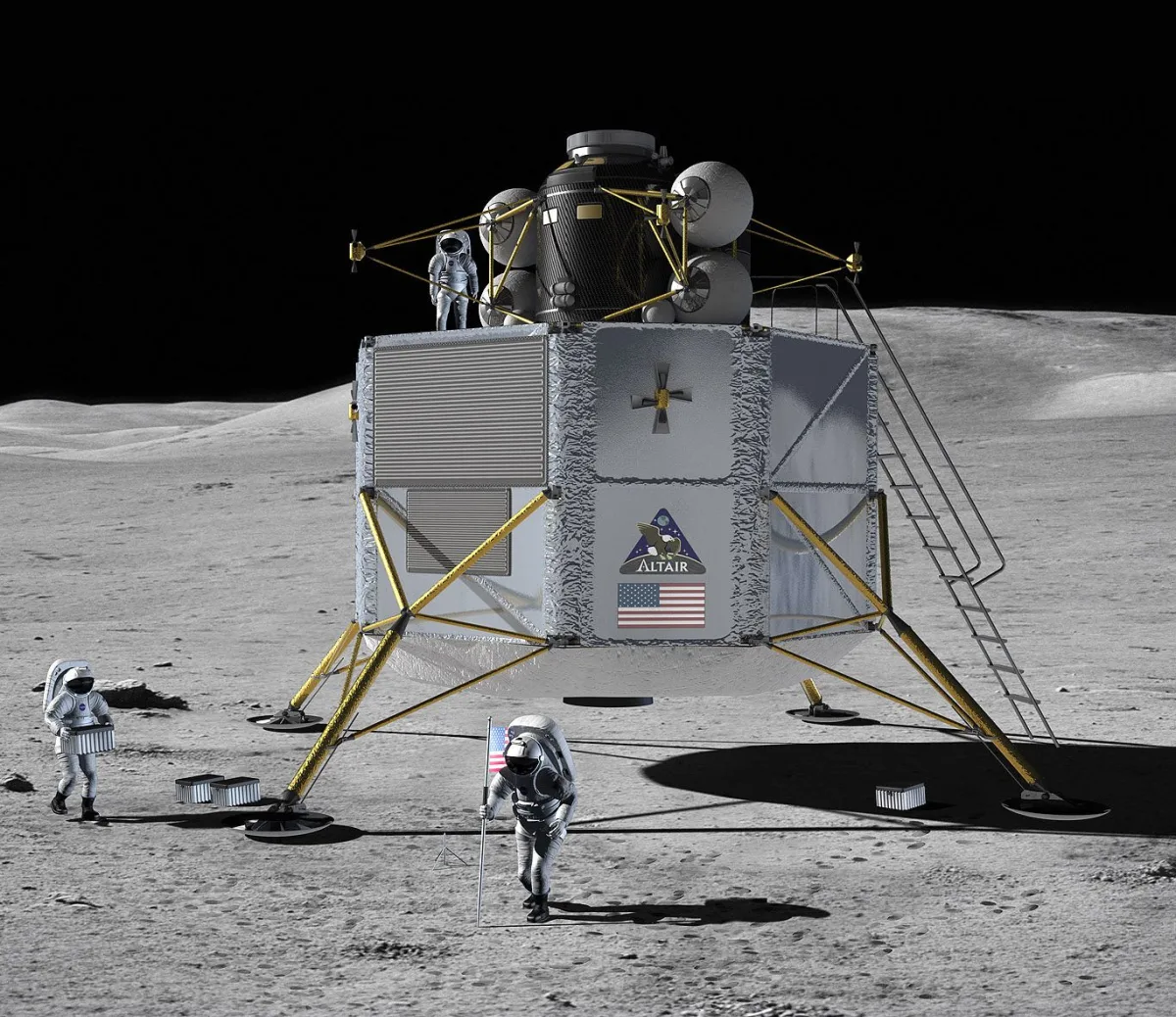
A new report from the National Academies of Sciences, Engineering, and Medicine has pinpointed four specific locations on the Moon that should be prioritized for future crewed missions. These sites—Bhabha Crater, Mons Hadley, the Orientale Basin, and the Aristarchus Plateau—are highlighted for their potential to advance cross-disciplinary scientific understanding and provide insights into long-term human habitation on the lunar surface.
The report emphasizes that exploring these nonpolar regions of the Moon offers novel opportunities to address significant scientific questions not only about Earth's closest celestial neighbor but also about the broader solar system and the universe. The selection of these sites is intended to guide future astronaut activities and research objectives.
Martian Moon Sample Return Mission Launched
The Martian Moons eXploration (MMX) spacecraft embarked on its ambitious journey this week, aiming to retrieve the first-ever samples from Phobos, one of Mars's moons. This mission, spearheaded by the Japan Aerospace Exploration Agency (JAXA), utilizes a specialized instrument based on PlanetVac technology, which received support from members of The Planetary Society for crucial testing phases.
The MMX spacecraft is expected to reach Mars in August 2027, with the collected samples scheduled for return to Earth in 2031. The PlanetVac technology, which has also been tested on the Moon, represents a significant advancement in sample collection capabilities for extraterrestrial bodies. This mission marks a major step in understanding the composition and origin of Martian moons.
Black Hole Research Yields Surprising Discoveries
New observations from the James Webb Space Telescope (JWST) have detected a substantial presence of heavy metals, defined as elements heavier than hydrogen or helium, surrounding the supermassive black hole at the center of the Milky Way, known as Sagittarius A* (Sgr A*). This finding, detailed in a recent publication, suggests that these metals likely originated from supernova explosions that dispersed them into the galactic center.
The detected metals, observed in gaseous form, exhibit a composition similar to that of nearby stars, indicating a potential shared origin and formation timeline. While these metals could offer clues about the distribution of heavy elements in the universe, they also introduce new complexities to understanding the environment around our galaxy's central black hole. Separately, a new study has concluded that exceptionally large black holes, with masses exceeding 100 billion times that of the Sun, do not constitute a significant portion of the universe's elusive dark matter. This research challenges a long-standing hypothesis that such massive objects could account for the unseen mass required to explain galactic dynamics.
Astronaut Heart Health and Early Universe Particles Explored
Research tracking 13 astronauts aboard the International Space Station for approximately six months suggests that the human heart may be more resilient for long-duration space travel, including potential missions to Mars, than previously assumed. The study, involving researchers from Northwestern Medicine, UT Southwestern, and UT Houston, found that astronauts' hearts adapted well to prolonged weightlessness and simulated Martian gravity, especially when combined with regular exercise.
In parallel, ongoing scientific inquiry is shedding light on fundamental questions about the universe's origins. Efforts are underway to investigate a hypothetical particle that may have played a crucial role in the early universe, potentially influencing why matter, rather than antimatter, dominates the cosmos. This research delves into the very beginnings of existence, seeking to understand the fundamental building blocks of the universe.
Ukrainian Scientists Work to Restore Damaged Telescope
In a testament to scientific resilience, Ukrainian scientists are actively engaged in efforts to restore a telescope that sustained damage during the ongoing conflict. The specific details of the telescope and the extent of the damage are part of broader scientific news coverage, highlighting the challenges faced by researchers in maintaining scientific infrastructure amidst war.
This initiative underscores the global commitment to scientific advancement, even in the face of significant adversity. The restoration work, though challenging, aims to bring a valuable scientific instrument back online for continued research and observation.
What This Means
These recent developments underscore a dynamic period in space science, marked by both ambitious exploration goals and deepening investigations into fundamental cosmic mysteries. The identification of key lunar landing sites and the launch of the MMX mission to Mars signal a renewed focus on in-situ resource utilization and sample return, crucial steps for understanding planetary evolution and paving the way for future human presence beyond Earth. The resilience of the human heart observed in astronauts also provides encouraging data for the feasibility of long-duration interplanetary travel. Concurrently, ongoing research into dark matter and the early universe, including the surprising findings about heavy metals near Sagittarius A* and the investigation into hypothetical particles, continues to refine our understanding of cosmic composition and history. The efforts to restore scientific equipment in conflict zones further highlight the persistent human drive for knowledge.



💬 Comments (0)