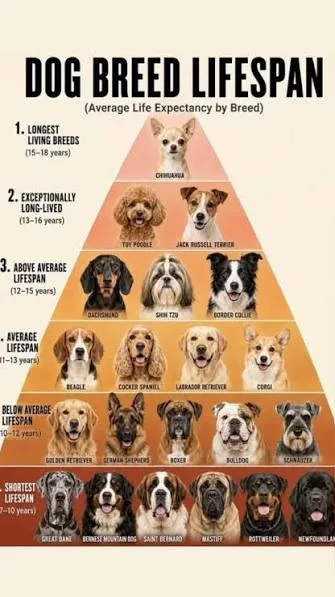
The Life Span Paradox in Dogs
In the animal kingdom, larger species generally have longer life spans. However, this trend is not true for the dog species; larger breeds generally age faster and die younger than smaller breeds. This phenomenon has puzzled scientists and dog lovers and led to extensive research to uncover the underlying reasons.
New Findings from Arizona State University
A recent study conducted by researchers at Arizona State University (ASU) offers a compelling molecular explanation for why larger dogs have shorter life spans. The study, published in Science on October 8, 2026, highlights the role of epigenetics in aging in dogs. Senior author Noah Snyder-Mackler emphasized that dogs make an exceptional model for understanding aging due to the significant variation in life span within the species.
The Role of DNA Methylation
The research focused on methylome, a chemical code that modifies DNA. This code consists of methyl groups that can inhibit gene activity. As dogs age, these methyl groups change predictably, affecting their biological age. The study, analyzing blood samples from 894 dogs enrolled in the long-term Canine Aging Project, revealed that larger dogs lose these protective chemical labels faster than smaller breeds.
Related Stories

Astronomers Detect Most Distant Fast Radio Burst from Galaxy
Astronomers have identified the most distant fast radio burst, FRB 20240304B, originating from a galaxy over 11 billion...

First Nuclear Clocks Tick, Promising New Era in Precision
Scientists have built the first working nuclear clocks, marking a potential leap forward in timekeeping and fundamental...

First Nuclear Clocks Offer New Precision in Timekeeping
Researchers have unveiled the first functional nuclear clocks based on thorium-229 isotopes. These devices promise...

When Does Consciousness Begin? New Insights into Baby Minds
Recent research suggests babies may develop complex emotional and cognitive abilities—including consciousness—much...
💬 Comments (0)