Early Universe Mysteries and Particle Physics
Scientists are continuing to probe the universe's earliest moments, with new research shedding light on a hypothetical particle that may have played a crucial role in the universe's formation. This particle is central to theories explaining why the universe is predominantly composed of matter. While particle physics remains a complex field, even for physicists, understanding these fundamental constituents is key to unraveling the universe's origins. The focus is on a particle that could have influenced the balance of matter and antimatter in the very beginning of existence.
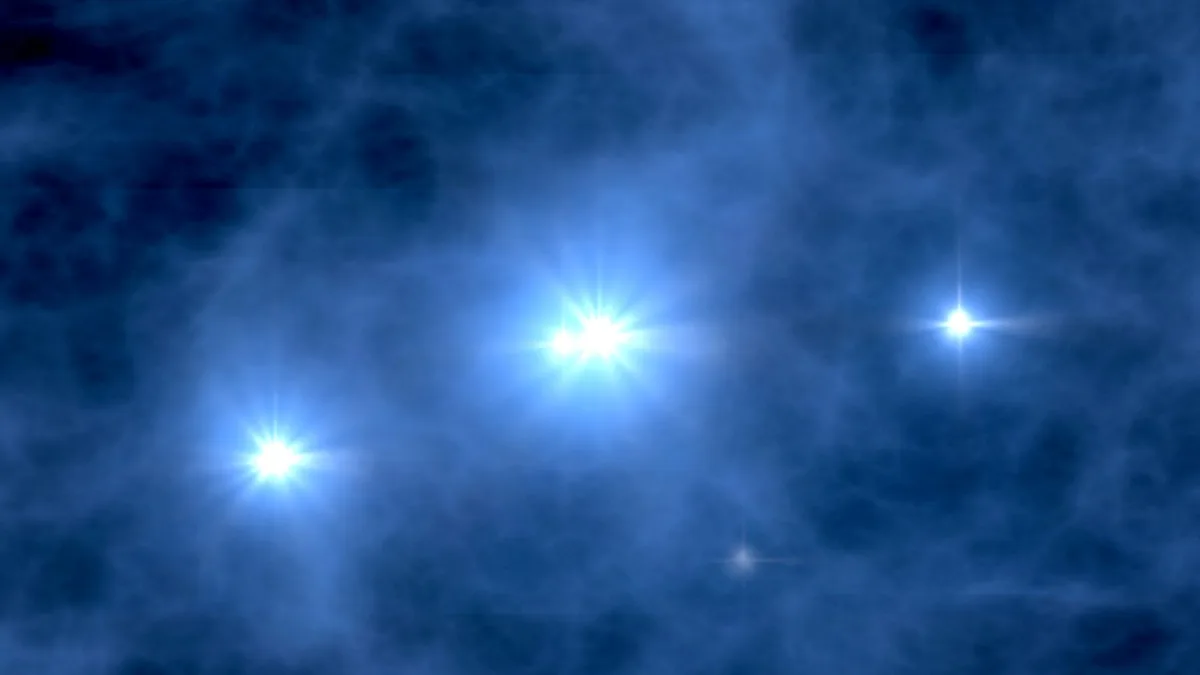
Further exploration into the early universe is also refining our understanding of reionization, a critical transition that occurred within the first billion years after the Big Bang. This epoch, beginning approximately 13 billion years ago, marked the clearing of a dense fog of neutral hydrogen that previously obscured ultraviolet light. Energetic radiation from early galaxies broke apart this neutral hydrogen into ionized protons and electrons, fundamentally altering the universe's transparency. The completion of reionization led to the observable universe we see today, a process that researchers are actively studying to rewrite our understanding of this pivotal phase.
Dark Matter and Galactic Structures
The elusive nature of dark matter continues to be a subject of intense scientific investigation. For decades, the existence of this unseen substance has been proposed to explain why galaxies do not disintegrate at their observed rotational speeds, with its gravitational pull acting as a cosmic glue. Dark matter is estimated to constitute about five-sixths of all matter in the universe, though its very existence remains a topic of debate. Its immense mass and low detectability have made black holes a compelling candidate for its composition.
However, a recent study has cast doubt on the idea that 'stupendously large black holes,' those exceeding 100 billion times the mass of the sun, are a major component of dark matter. The research investigated these colossal black holes as a potential dark matter candidate, but the findings suggest they do not account for the majority of this mysterious substance. This leaves the composition of dark matter an open question, driving further research into alternative explanations for its pervasive influence on galactic dynamics.
Metals Around the Milky Way's Black Hole
New observations from the James Webb Space Telescope (JWST) have revealed a surprising abundance of heavy metals in the vicinity of the Milky Way's supermassive black hole, Sagittarius A* (Sgr A*). In astronomical terms, 'metals' refer to any element heavier than hydrogen and helium, such as oxygen, carbon, iron, and gold. These elements are typically forged in the fiery cores of dying stars and then dispersed into space, eventually becoming incorporated into new celestial bodies.
The metals detected by JWST, observed in gaseous form, appear to share a similar composition with nearby stars. This suggests a common origin, implying that both the gas and the stars formed around the same time. Scientists believe this metallic material likely originated from supernova explosions, which violently ejected these elements into the region surrounding Sgr A*. This discovery could offer new insights into how Earth acquired its own heavy elements, while also potentially complicating existing theories about the evolution of our local black hole.
Astronaut Health and Future Mars Missions
The physiological challenges of long-duration spaceflight, particularly for missions to Mars, are being reassessed with encouraging new findings regarding the human heart. A recent study monitoring 13 astronauts aboard the International Space Station for approximately six months suggests that the human heart may be more resilient than previously thought. These astronauts' hearts demonstrated a remarkable adaptation to prolonged weightlessness and successfully handled simulated Martian gravity conditions without significant issues.
This research, conducted by teams from Northwestern Medicine, UT Southwestern, and UT Houston, offers renewed optimism for future crewed missions to the Red Planet. The findings indicate that with consistent exercise during spaceflight, astronauts are well-equipped to endure the arduous journey to Mars and maintain functionality under its reduced gravitational pull. This study provides crucial data for mission planning, easing concerns about cardiovascular health during extended deep-space voyages.
Advancing Space Exploration and Cooperation
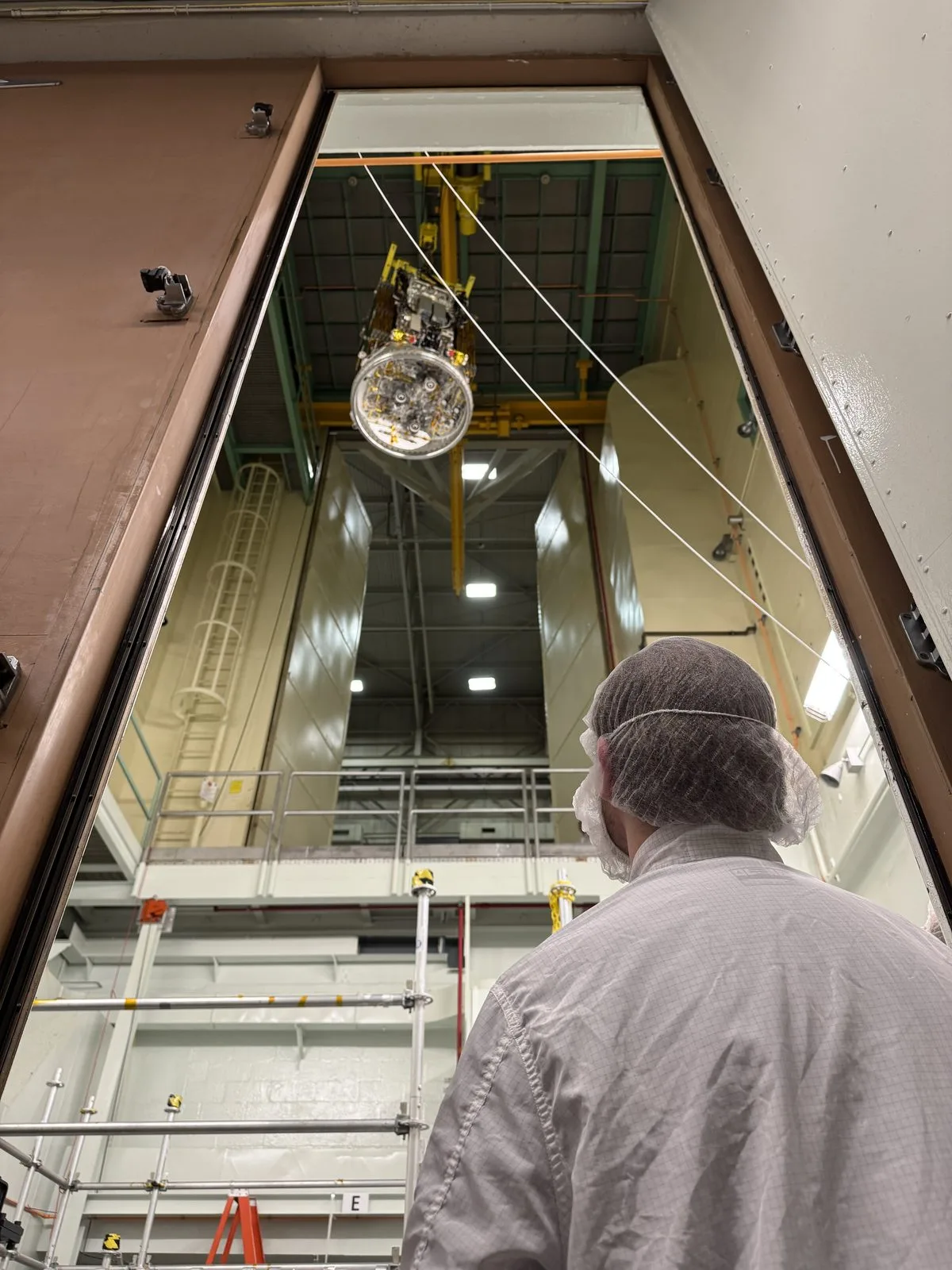
Space exploration continues to advance on multiple fronts, with significant missions and technological developments. The Japan Aerospace Exploration Agency's Martian Moons eXploration (MMX) spacecraft recently launched on a pioneering mission to collect the first-ever samples from Phobos, one of Mars' moons. The MMX spacecraft is equipped with a specialized instrument, based on PlanetVac technology, designed to gather pieces of Phobos. This technology, which has received support from The Planetary Society, has already demonstrated its capabilities on the Moon and is now en route to the Martian system, with sample return to Earth anticipated in 2031.
Meanwhile, NASA's Lucy mission, dedicated to exploring 11 asteroids over 12 years, has reached its five-year milestone. Launched on October 16, 2021, Lucy has already completed flybys of the asteroids Dinkinesh and Donaldjohanson. Its upcoming targets include the Jupiter Trojan asteroid Eurybates and its satellite Queta, scheduled for August 2027. These missions underscore the ongoing global effort in space science, which scientists emphasize requires open cooperation despite geopolitical tensions. A recent symposium in Beijing highlighted the importance of international collaboration, with participants stressing that scientific advancement transcends borders and relies on the collective efforts of researchers worldwide.
what this means
Recent advancements in space science are broadening our understanding of the cosmos, from its earliest moments to the potential for human exploration. The ongoing research into particle physics and reionization is refining our models of the Big Bang and the universe's evolution. Simultaneously, new findings about dark matter and the composition of regions around supermassive black holes are challenging existing theories and opening new avenues of inquiry. The resilience of the human heart under simulated Martian conditions offers tangible hope for future crewed missions, making the prospect of interplanetary travel seem more attainable. Furthermore, the successful launches and progress of missions like MMX and Lucy, alongside calls for international cooperation, highlight a dynamic and collaborative future for space exploration, pushing the boundaries of human knowledge and technological capability.

💬 Comments (0)