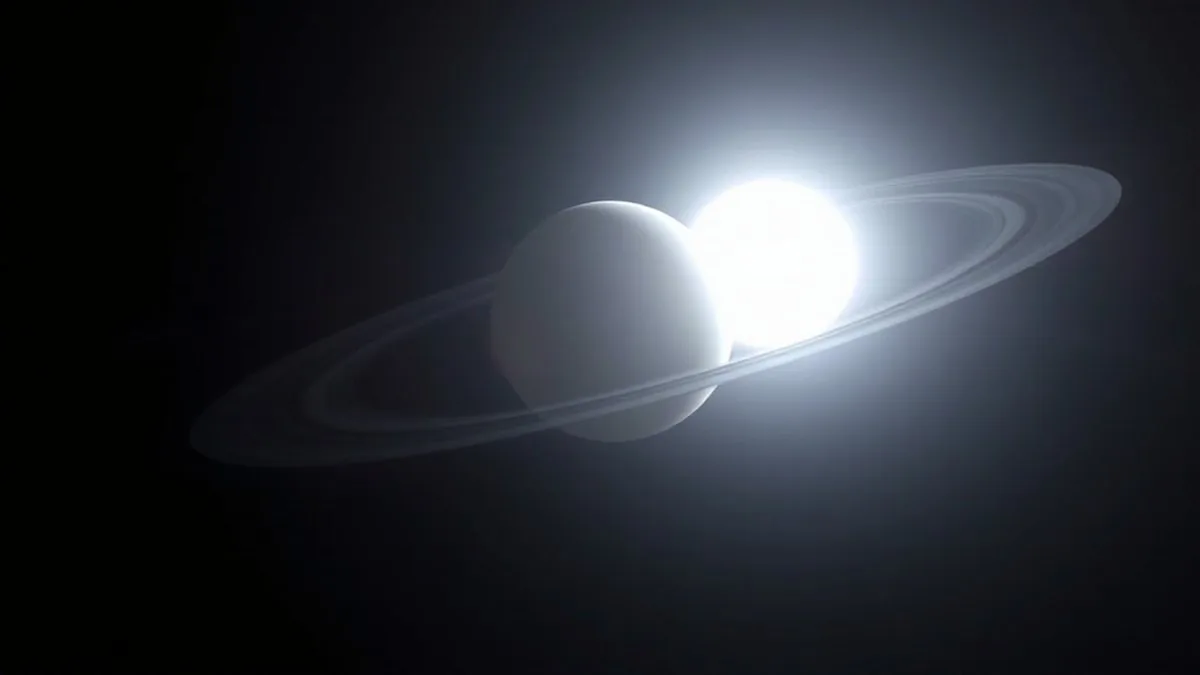
Second-Generation Planet Candidate Discovered
For over twenty-five years, unusual chemical signatures from the white dwarf star HS 0209+0832 remained unexplained in Hubble Space Telescope archives. Recent analysis has revealed these signatures may indicate a second-generation planet orbiting the stellar remnant, located approximately 270 light-years from Earth.
What are Second-Generation Planets?
Most planets form within protoplanetary disks alongside their host stars. However, some worlds can arise after a star’s death, assembling from material shed during its final stages. These ‘second-generation’ planets have long been theorized around pulsars but this is the first candidate discovered orbiting a white dwarf – a more common type of stellar remnant.
Unusual Atmospheric Composition
Researchers identified an unusual atmospheric composition surrounding HS 0209+0832. Unlike typical planetary debris which contains rock-forming elements like silicon and iron, this white dwarf’s atmosphere is enriched with heavier elements including zinc, copper, and notably, niobium – present in quantities over 1,000 times greater than found in our sun. The presence of these heavy elements suggests recent arrival from an external source.
Evidence from Hubble and TESS
The discovery stems from data collected by both the Hubble Space Telescope and the Transiting Exoplanet Survey Satellite (TESS). A sinusoidal photometric period of 4.399 ± 0.026 days was detected, potentially indicating thermal emission variability from a planetary day-night cycle or a transiting cometary tail associated with an evaporating gas giant. Scientists believe intense ultraviolet radiation is causing the planet’s atmosphere to evaporate and fall onto the white dwarf.
A 'Phoenix Planet'
Jamie Williams, lead author of the study published in Nature Astronomy on October 5, 2026, described the finding as a “planet that has risen from the ashes of the very star it once orbited.” Further research is needed to confirm the planet’s existence and characteristics.

💬 Comments (0)