Swift Observatory Faces End of Mission Amid Orbital Decay
NASA's Neil Gehrels Swift Observatory is nearing the end of its operational life as its orbit rapidly decays, a fate accelerated by atmospheric drag and a recent, unsuccessful rescue mission. The observatory, launched in November 2004, has spent nearly 22 years observing some of the universe's most powerful and fleeting cosmic events, including gamma-ray bursts. However, its orbit has been steadily deteriorating, a natural consequence of its presence in low Earth orbit where atmospheric drag gradually reduces altitude. This effect was recently magnified by a bout of solar storms, causing Swift to sink faster than anticipated.
Scientists are currently working to eke out every last bit of observational data from the aging observatory. Swift is expected to continue conducting science operations for a couple of weeks at most, with instruments re-activated for a final series of observations. The observatory is currently orbiting Earth at an altitude of approximately 200 miles (325 kilometers). Projections indicate that by early to mid-October, it could dip below 185 miles (300 kilometers), a threshold below which spacecraft operations become significantly more difficult, and science observations will likely cease.
Failed Rescue Mission by Katalyst Space Technologies
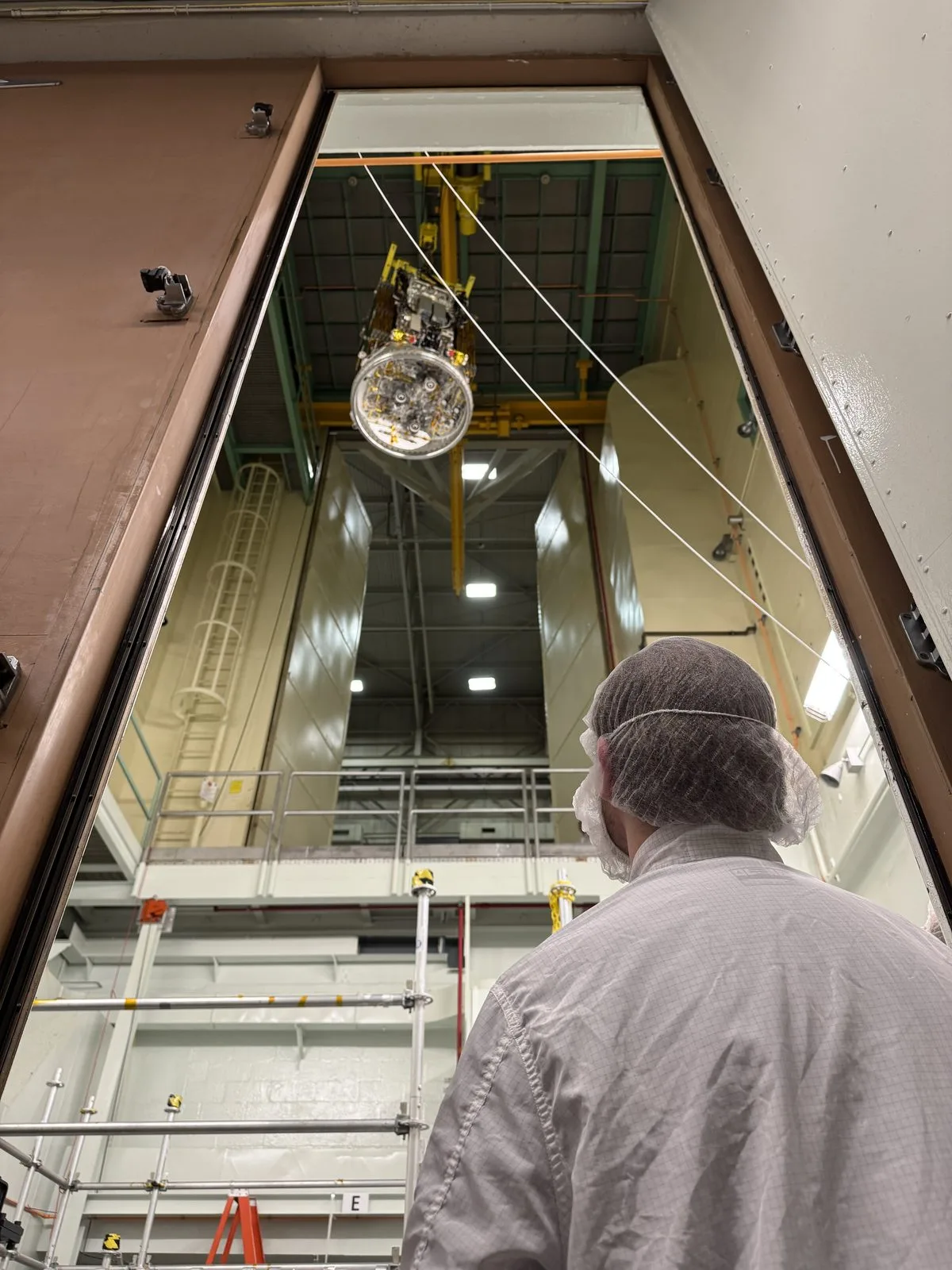
An ambitious attempt to extend Swift's operational life through a private contract has concluded without success. NASA awarded a contract to Katalyst Space Technologies of Flagstaff, Arizona, to boost the observatory's altitude. Katalyst designed, built, tested, and launched a specialized robotic servicing spacecraft named LINK, which was sent into orbit aboard a Northrop Grumman Pegasus XL rocket in July. The mission's objective was for LINK to capture and raise Swift over several months.
However, the LINK spacecraft encountered significant technical issues shortly after its launch. The robotic vehicle began spinning uncontrollably, causing it to tumble back towards Earth. This critical failure ended the rescue mission prematurely. LINK itself subsequently burned up in Earth's atmosphere during reentry on Friday, September 25. Engineers had briefly guided LINK within nine miles of Swift, but the spacecraft lacked the necessary fuel to perform the required orbital boost for the NASA telescope.
Swift's Legacy of Cosmic Discovery
Launched in November 2004, the Neil Gehrels Swift Observatory was initially planned for a two-year mission to study gamma-ray bursts, the most powerful explosions in the universe. However, its capabilities and the dedication of its scientific team allowed it to far exceed its design life, becoming one of NASA's most productive astrophysics observatories. Swift is equipped with three telescopes capable of observing in visible, ultraviolet, X-ray, and gamma-ray light, enabling it to quickly pivot and observe a wide range of cosmic phenomena.
Throughout its nearly 22 years in orbit, Swift has made numerous notable observations. It has provided invaluable data on transient cosmic events, acting as a rapid-response lookout for astronomers. This ability to quickly slew toward sudden cosmic events allowed other, more specialized telescopes to follow up, significantly advancing our understanding of the universe. Some of its most significant contributions include detecting an unusual 'wandering' supermassive black hole devouring a star and capturing the most luminous eruption ever seen, a gamma-ray burst designated BOAT (Brightest of all Time).
The Challenge of Orbital Decay and Future Servicing
The phenomenon of orbital decay is a fundamental challenge for all spacecraft operating in low Earth orbit. Even in the near-vacuum of space, there is enough residual atmosphere to create drag, which slows spacecraft down and causes their orbits to gradually lower. This process is a constant battle for satellite operators, who must use onboard propulsion systems to maintain their altitude. Swift, lacking such robust propulsion for extended orbital maintenance, has been particularly susceptible to this effect.
The recent solar storms significantly exacerbated Swift's orbital decay, pushing it into a faster descent than anticipated. NASA awarded Katalyst the contract in September 2025, giving the company less than a year to design, build, test, and launch the LINK spacecraft. While the rescue mission failed, NASA stated that the effort still produced valuable experience that will benefit future in-space servicing programs. The agency is also reportedly scrambling to replace the observatory's crucial role as a rapid-response alert system for other telescopes.
What This Means for Astronomy
The impending end of the Swift Observatory's mission marks the conclusion of a highly successful and influential era in astrophysics. For nearly 22 years, Swift has served as a critical tool for understanding the most energetic phenomena in the universe, from the explosive deaths of stars to the feeding habits of black holes. Its ability to rapidly detect and alert other observatories to transient events has been instrumental in coordinating multi-wavelength astronomical campaigns, leading to groundbreaking discoveries that might have otherwise been missed.
Swift's loss highlights the ongoing challenge of managing aging spacecraft in orbit and the complexities of in-space servicing. While the recent rescue attempt by Katalyst Space Technologies ultimately failed due to technical issues with the LINK spacecraft, the lessons learned from this ambitious endeavor are expected to inform future missions aimed at extending the life of valuable orbital assets. NASA's efforts to find replacements for Swift's rapid-response capabilities underscore the unique and vital role the observatory has played in the astronomical community.



💬 Comments (0)